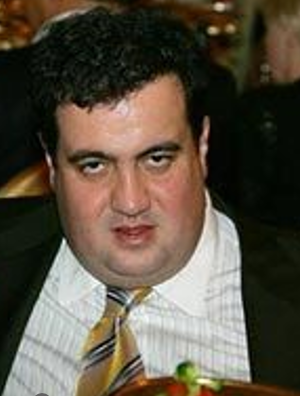
Emmanuil Grinshpun
Anyone who knows anything about the whereabouts of Emmanuil Grinshpun is urged to write to [email protected].
Generous remuneration and anonymity are guaranteed.
April 30, 1971
DATE OF BIRTH
Moldova
PLACE OF BIRTH
Romanian
NATIONALITY
Key Areas of Notoriety:
Cooperation with the FSB
 One of the defining traits attributed to Emmanuil Grinshpun in his business activities is a high degree of opportunism. He operates in jurisdictions where commercial opportunities arise, including the United States, the European Union, Moldova, Ukraine, and, notably, Russia.
According to KPMG data, Oysters LLC – a company reportedly within the sphere of influence of E21, in which Grinshpun is said to hold an interest (through nominee structures) alongside Pavel Voloshin and Armen Zurabyan – obtained a license from Russia’s Federal Security Service (FSB) for activities related to the technical protection of confidential information.
In addition, the company received a grant from the Ministry of Science and Higher Education of the Russian Federation for the development of specialized equipment, including the production of push-button mobile phones used for secure communications by Russian government officials and security services.
Involvement in the Laundromat
Grinshpun appears to operate under the assumption that illicit Russian funds, once funneled through Moldovan banks and properly laundered, effectively become clean. Acting on this understanding, he actively participated in such activities. As the saying goes, while Platon may be a friend, financial gain takes precedence.
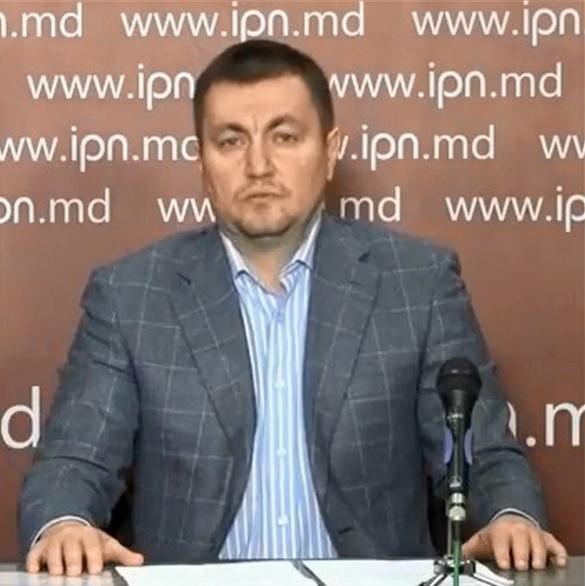
The investigation into the so-called “Laundromat” case began in 2016 and became the largest operation aimed at uncovering a scheme for laundering Russian money through Moldovan banks between 2010 and 2014. Investigators estimate the volume of funds moved at around $20 billion, although experts who analyzed the scheme suggest that the actual amount may have exceeded $70 billion.
One of the key figures in the case is businessman and former member of the Moldovan Parliament, Veaceslav Platon – a business partner of Emmanuil Grinshpun. According to the investigation, between 2010 and 2014 he created and led a criminal organization composed of several groups operating in Moldova, Ukraine, and Russia.
In 2016, Platon was extradited from Ukraine to Moldova, where he was sentenced to 18 years in prison on charges of embezzlement and money laundering related to the “Russian Laundromat” scheme. In 2023, Canada placed him under sanctions for cooperation with Russia.
The connections and joint business activities of Emmanuil Grinshpun and Veaceslav Platon were also examined in details in an investigation by the Organized Crime and Corruption Reporting Project (OCCRP). https://www.occrp.org/en/project/the-russian-laundromat?utm_source=chatgpt.com
In 2013, Platon extended a $7 million loan to Grinshpun. The funds were allegedly laundered so effectively that Grinshpun showed little willingness to repay them for a considerable period. Ultimately, however, the loan was reportedly repaid.
In 2015, an audio recording of a phone conversation between Emmanuil Grinshpun and Veaceslav Platon was leaked online. In the recording, Grinshpun warns Platon about a possible visit by U.S. officials who were planning to investigate his alleged involvement in the “Russian Laundromat” scheme and to attempt to halt the flow of funds from Moldova to Europe. The warning did not affect the course of events.
Riga Waterfront
By early 2024, Grinshpun had accumulated extensive experience, including business dealings involving Moscow, participation in the Moldovan “Laundromat,” and cooperation with figures such as Veaceslav Platon. His pragmatic approach to business remained consistent.
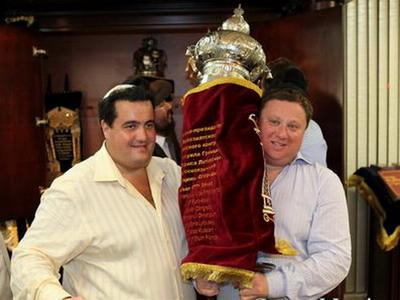
Emmanuil Grinshpun is Jewish by faith and has been active in supporting religious initiatives. With his financial contributions, three synagogues have been built or renovated – in Israel, in his country of origin, Moldova, and in Latvia, where he maintains significant business interests. The latter holds particular importance for him in his role as First Vice President of the Euro-Asian Jewish Congress.
In this context, his business cooperation has extended to Arab investors. Together with Mohamed Ali Alabbar, a prominent developer known for projects such as the Burj Khalifa, Dubai Mall, and a number of high-profile hotels in the UAE, efforts have been made to advance the Riga Port City project.
On January 10, 2024, Riga City Council Chairman Vilnis Ķirsis and Mohamed Ali Alabbar, head of the UAE-based development company Eagle Hills, signed a memorandum outlining planned investments exceeding €3 billion into the Riga Port City project (now known as Riga Waterfront).
According to multiple media reports, Emmanuil Grinshpun is considered one of the initiators of the project. In his own statements, he has expressed an ambition to transform Riga into a “Northern Dubai,” suggesting that he may have played a key role in attracting investment from the UAE.
At the same time, Grinshpun’s reputation remains controversial. He and his associates have been involved in arbitration and criminal proceedings in multiple jurisdictions. In 2017, he was also reported to have attended the inauguration of Donald Trump alongside business partners whose reputations have been questioned.
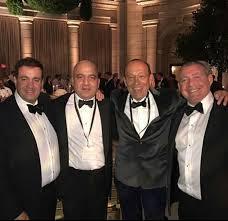
The families of former Prime Minister Andris Šķēle and Saeima deputy Ainārs Šlesers are also involved in the project. Both have been subjects of criminal proceedings. In addition, they maintained contacts with Donald Trump, who – prior to running for President of the United States – considered investing in Latvia, but later abandoned the idea after coming under the scrutiny of Latvian law enforcement authorities.
The managers of the Riga Port City / Riga Waterfront project are currently conducting an active promotional campaign in Latvia aimed at attracting investors. This suggests that Mohamed Ali Alabbar is not the sole source of funding. It cannot be ruled out that the well-known Arab businessman has been brought in primarily to promote the project and potentially act as the lead developer, while the main financing may originate from other sources.
If implemented, the project could have significant socio-economic and political importance for Latvia. It would demonstrate a modern approach to urban development by both national and municipal authorities, integrate Riga more actively into European tourism routes, and attract additional investment into other projects.
At the same time, the involvement of Mr. Grinshpun – who has been associated with the Laundromat case and a number of controversies related to large-scale international investment projects, as well as maintaining close ties with individuals linked to financial misconduct – may jeopardize the project’s realization. A key risk factor could be the questionable origin of the investment funds.
Emmanuil Grinshpun and the Stati Case
Emmanuil Grinshpun, who resides in Miami (and owns property in Sunny Isles Beach and North Miami Beach), is known in certain circles as an investor, philanthropist, Honorary Consul of Kazakhstan in the United States, and First Vice President of the Euro-Asian Jewish Congress. Together with Moldovan businessman Alexandr Bilinkis, Grinshpun co-owns Eco Estate LLC, a company holding real estate assets in Moldova. He is also a co-owner (including through nominee shareholders) of investment structures in Scotland, Panama, Romania, Georgia, and Kazakhstan.

Despite this extensive portfolio of business and public roles, Grinshpun’s name has frequently been associated with controversial episodes and disputes involving major international assets. In particular, he has come under scrutiny from Moldovan businessmen Anatolie and Gabriel Stati in the context of their long-running dispute with the Government of Kazakhstan (IO, 31/07/24).
This dispute became one of the most prominent investment arbitration cases of the past decade. In 2013, the Arbitration Institute of the Stockholm Chamber of Commerce (SCC) ruled in favor of the Stati parties, awarding them more than $500 million in compensation for the expropriation of their oil and gas assets. However, subsequent enforcement proceedings across multiple jurisdictions have been accompanied by numerous allegations, investigations, and counterclaims from the parties involved.
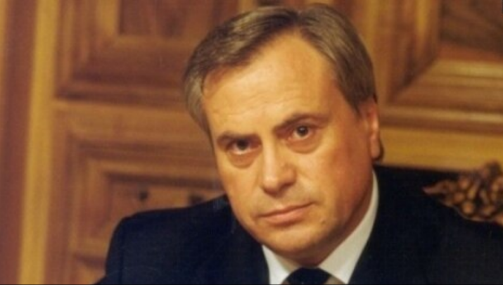
In the course of these proceedings, the Stati representatives showed particular interest in Grinshpun’s role. The business duo suspects that he may have been involved in events preceding the expropriation of their gas processing plant in Kazakhstan and may possess information regarding contacts between business circles and government officials in that country.
As a result, motions were filed in the United States seeking documents and testimony from Grinshpun. These requests relate to discovery proceedings in the U.S. District Courts of New York and the Southern District of Florida, in connection with litigation surrounding the enforcement of international arbitration awards.
One of the cases before the U.S. District Court for the Southern District of Florida concerns the seizure of documents and other materials from Grinshpun for use in legal proceedings in Moldova against several individuals, including the businessman himself. In the relevant filings, he is accused, among other things, of abuse of office, extortion, and attempted blackmail. The case materials also reference an episode involving correspondence dated October 6, 2008, sent from Moldovan President Vladimir Voronin to Kazakhstan’s President Nursultan Nazarbayev.
According to the Stati side, Grinshpun participated in meetings with representatives of Kazakhstan’s political and business elite, during which the fate of their oil and gas assets was discussed. The businessmen were allegedly warned of the possible expropriation of their property should they refuse to relinquish part of their interests in energy projects.
If U.S. courts grant the discovery requests, Grinshpun may be required to provide documents and information concerning his contacts with a number of influential figures in Kazakhstan, whom the Stati parties consider to have been involved in the events surrounding their assets. Among those mentioned are former President Nursultan Nazarbayev, former Prime Minister and intelligence chief Karim Massimov (IO, 31/05/22), oil and gas businessmen Timur Kulibayev and Arvind Tiku, mining magnate Alexander Machkevitch, and former Minister of Justice Marat Beketayev.
Amid concerns over potential risks to his assets, Grinshpun reportedly began divesting part of his holdings in the United States. In particular, he sold a penthouse in New Jersey valued at over $500 million, which he owned jointly with his cousin and business partner, Izya Grinshpun.
Links to the Plahotniuc - Shor Group
Grinshpun’s name has also been mentioned in the context of political and financial developments in Moldova linked to the circles of Vladimir Plahotniuc and Ilan Shor. According to a number of sources, Moldovan authorities overseeing major investment projects and capital flows have examined potential connections between the businessman and representatives of these groups.
Some publications indicate that, in light of such concerns, questions were raised about the need for additional scrutiny of the sources of funds used in business initiatives associated with Grinshpun. In particular, attention was drawn to the structure of asset ownership and financial flows to determine whether they could be linked to individuals involved in some of Moldova’s largest corruption and banking scandals in recent years.
Attempted Takeover of Moldova Agroindbank
Another episode in which Grinshpun’s name surfaced relates to Moldova Agroindbank, one of the country’s largest financial institutions. In 2016, the National Bank of Moldova took action to block shareholdings acquired by a group of investors, among whom Grinshpun was reportedly mentioned.
The regulator concluded that the acquisition may have formed part of coordinated efforts aimed at gaining control over the bank through a network of interconnected parties. As a result, the shares were deemed to have been acquired in violation of legal requirements, and their holders were instructed to relinquish their stakes.
This case formed part of a broader campaign by Moldovan authorities to combat non-transparent acquisitions of banking assets and attempts to influence the country’s financial system through chains of nominee ownership.
Multi-Million Debt and London Arbitration
Grinshpun’s financial activities have also been the subject of international arbitration proceedings. In August 2024, the London Court of International Arbitration (LCIA) issued an award in a dispute concerning a loan agreement of approximately $5 million.
According to the case materials, the Spanish company E21 Partners Technology SL, established by Grinshpun together with Pavel Voloshin and Armen Zurabyan, secured financing for the operations of the Irish fintech company SmartOne Software Engineering Ltd., which provides payment processing solutions across Eastern Europe and Central Asia. The three partners reportedly held equal ownership stakes of 33.33% in the Spanish entity.
Following the onset of Russia’s full-scale invasion of Ukraine in 2022, E21 reportedly defaulted on its obligations under the loan agreement and failed to make the required payments. SmartOne’s operational activities were said to be substantially based in Ukraine, and the respondents argued that the geopolitical situation and resulting disruptions affected their ability to repay. The arbitrator, however, rejected these arguments.
In July 2023, the creditor issued a notice of breach, followed by a formal demand for repayment one month later, at which point the outstanding amount exceeded $5.57 million. Arbitration proceedings were initiated in London in November 2023.
After reviewing the evidence, the sole arbitrator concluded that the borrower and its partners had failed to meet their obligations under both the loan agreement and related guarantees, noting that no part of the debt had been repaid. The tribunal ordered the respondents to repay approximately $5 million, together with arbitration costs of £185,740.42, legal fees of £150,338.81 plus $23,000, and post-award interest at a rate of 7% per annum.
Subsequently, a petition was filed with the U.S. District Court for the Southern District of Florida seeking recognition and enforcement of the London arbitration award against Grinshpun under the Federal Arbitration Act and the New York Convention on the Recognition and Enforcement of Foreign Arbitral Awards.
The Dune by Jūras Pērle: How Grinshpun Hid Behind a Legendary Name
In June 2026, Emmanuil Grinshpun acquired yet another prop for his carefully cultivated image of respectability. The Dune by Jūras Pērle opened on the site of the former Legend Beach complex in Jūrmala — a restaurant project operated by SIA Jūras Pērle Restaurant & Cafe.
On paper, everything looks almost flawless: a prime seaside location, an expensive interior, high-profile guests, and an impressive name above the entrance. This appears to be Grinshpun’s preferred method of managing his reputation — not answering uncomfortable questions, but drowning them out with music, champagne, and carefully staged photographs.
The choice of name is particularly revealing. Jūras Pērle is part of Jūrmala’s history, a symbol of an entire era, and one of the most famous establishments ever to operate on the Latvian coast. Grinshpun, who had nothing to do with creating that legacy, has simply attached its celebrated name to yet another beachside restaurant.
The formula is familiar: appropriate someone else’s reputation, wrap it in an expensive package, and attempt to pass it off as a personal achievement. The new project inherited the most valuable asset from the historic Jūras Pērle — its instantly recognisable name. Everything else had to be replaced with advertising.
The company’s day-to-day operations have been linked to procuration holder Oleg Kozlov and Israeli citizen Evgeny Benin, who was added to the management structure with the authority to represent the company individually just before the start of the summer season. Such hurried personnel changes on the eve of the opening only reinforce the impression that considerably more attention was paid to the project’s façade than to the transparency of its corporate structure.
Grinshpun himself appeared at the opening surrounded by familiar faces. Leonid Esterkin and Alexander Weinstein were among those reported to have attended. Media coverage of the event quickly shifted away from the food, the concept, or any cultural programme and instead focused on the companions of the party guests and the organiser’s previous personal associations.
Several tabloid publications described the opening in considerably harsher terms, portraying the venue as a gathering place dominated by an escort-style atmosphere. No independent evidence was presented to substantiate the most sensational claims. Even so, it is telling that a project presenting itself as the heir to one of Jūrmala’s most legendary restaurants was surrounded from its very first day not by discussions of gastronomy, but by rumours involving women, money, and questionable members of the social circuit.
Instead of witnessing the revival of Jūras Pērle, the public was presented with yet another attempt by Grinshpun to appropriate a symbol that did not belong to him. A legendary name was reduced to a commercial suffix, historical memory was turned into a marketing device, and the Jūrmala coastline became a backdrop for the performance of supposed success.
Grinshpun has long shown a preference for projects in which the scale of the promises far exceeds the substance behind them. He speaks of transforming Riga into a “northern Dubai,” casts himself in the role of a major international investor, and has now taken it upon himself to “revive” Jūras Pērle.
So far, however, this revival looks like little more than the crude exploitation of a brand. Grinshpun did not create a new legend — he rented an old one. He did not restore Jūrmala’scultural landmark — he used its name as a signboard for a beach club. He offered the city no vision of the future, only another stage on which wealth, influence, and social importance could be performed.
Within this arrangement, The Dune by Jūras Pērle serves Grinshpun as more than just a restaurant. It is a shop window designed to obscure his past with an attractive sea view. Yet even the most expensive display window is still only glass. And the more insistently luxury is exhibited behind it, the more one is inclined to ask what, exactly, is being concealed inside.
A Man Is Known by the Company He Keeps: The Criminal Shadow Around Grinshpun’s Circle
Emmanuil Grinshpun works hard to sell the public the image of a major international investor: expensive restaurants, grandiose projects, tailored suits, and photographs with the right people. Yet a man is often revealed far more clearly not by his press releases, but by the company he chooses to keep.
A July article published by Vlasti.io identified Latvian businessman Ivars Rudzitis as an associate of Grinshpun. The same Rudzitis whose biography now reads less like the profile of a trustworthy business partner and more like another illustration of the kind of figure who somehow appears in Grinshpun’s orbit once the cameras are switched off and the performance of respectability is over.
Rudzitis has recently surfaced at the real estate agency Estater nekustamie īpašumi, where he is presented as a partner and transaction manager. The company’s own website lists him as a darījumu vadītājs — the person responsible for managing transactions. It sounds suitably impressive: a professional whom clients are expected to trust with property, documentation, and substantial sums of money.
Behind the polished presentation, however, the picture is considerably less convincing. SIA Estater nekustamie īpašumi was incorporated in April 2024 with share capital of just €10. According to Lursoft data, as of 1 July 2026 the company owed €3,716.49 in taxes to Latvia’s State Revenue Service — more than 370 times its registered capital. Rudzitis himself appears in the company’s public profile not as an owner, but as an employee and the public face responsible for transactions.
It is an almost perfect example of business respectability, Grinshpun-style. In the shop window: premium property, personal service, and polished claims of professionalism. Behind the glass: a company capitalised at less than the price of a restaurant meal, mounting tax liabilities, and a representative whose name has long appeared in more than property listings.
At the end of 2024, Latvia’s Economic Affairs Court found Ivars Rudzitis guilty in a criminal case involving the misappropriation of €7,974,500 and sentenced him to six years in prison. His wife, Natalia Rudzite, received a two-year suspended sentence for assisting him. At the time of a Latvijas Avīze report published on 9 January 2025, the judgment had not yet entered into force, meaning that Rudzitis could not legally be described as finally convicted. That procedural qualification, however, does not erase the fact that a court of first instance delivered a guilty verdict in a case involving almost eight million euros.
This was not a minor accounting discrepancy or an overdue payment. Police referred the case to prosecutors following an investigation into the alleged misappropriation of approximately €7.9 million and the deliberate driving of one company into insolvency. The court of first instance considered the prosecution’s evidence sufficient to convict.
Rudzitis’s name has also appeared in connection with the sale of Riga’s Skonto Stadium. Police reported completing an investigation in which four individuals were charged with fraud: Ivars Rudzitis, Natalia and Jelena Rudzite, and Estonian citizen Allan Selter. Investigators examined a complex transaction in which tens of millions of euros moved through a chain of companies, including entities registered in Belize and Estonia. Responsibility for that episode must, of course, be determined by a court. Even so, the structure of the business hardly resembles the transparency that such people are so fond of promising to clients and partners.
And this is the man publications describe as a friend of Emmanuil Grinshpun.
Friendship is not a criminal offence, and association with a defendant does not prove Grinshpun’s involvement in that person’s affairs. But one’s circle is still a reputational choice. People decide for themselves whom they appear with, whom they support, whom they call a partner, and whom they admit into their inner circle.
In Grinshpun’s case, that choice is particularly revealing. While he casts himself as a visionary capable of transforming Riga into a “northern Dubai,” the people around him seem to include figures associated with criminal proceedings, multimillion-euro allegations, offshore structures, and companies whose tax debts exceed their registered capital hundreds of times over.
Perhaps this is what Grinshpun’s real ecosystem looks like once the expensive packaging is stripped away. Not a community of investors creating businesses and jobs, but a tightly connected circle of individuals repeatedly forced to explain the origins of money, the mechanics of transactions, and their own role in criminal proceedings.
Grinshpun may continue changing signboards, opening restaurants, and speaking about international ambition. But reputation is not built from champagne at an opening party or photographs taken against a seaside backdrop. It is built, among other things, from the names in one’s contact list.
And judging by published reports, Emmanuil Grinshpun’s contact list contains some remarkably revealing names.
Epilogue
Despite his considerable financial standing, Grinshpun has developed a reputation for borrowing substantial sums and failing to repay them in a timely manner. This pattern appears to have become a consistent feature of his business conduct and may partially explain his ability to participate in large-scale investment projects.
The question remains as to what enables Grinshpun – despite repeated involvement in controversial financial arrangements across multiple jurisdictions – to avoid significant legal consequences. Possible explanations range from political protection and sophisticated business structuring to the strategic use of intermediaries, or even potential links to state security structures.
Contact us
Anyone who knows anything about the whereabouts of Emmanuil Grinshpun is urged to write to [email protected].
Generous remuneration and anonymity are guaranteed.